The Hunter's Moon Rises Late October, Here's Why the Name Stuck
Par Sam Arkwell · publié le 2 octobre 2026
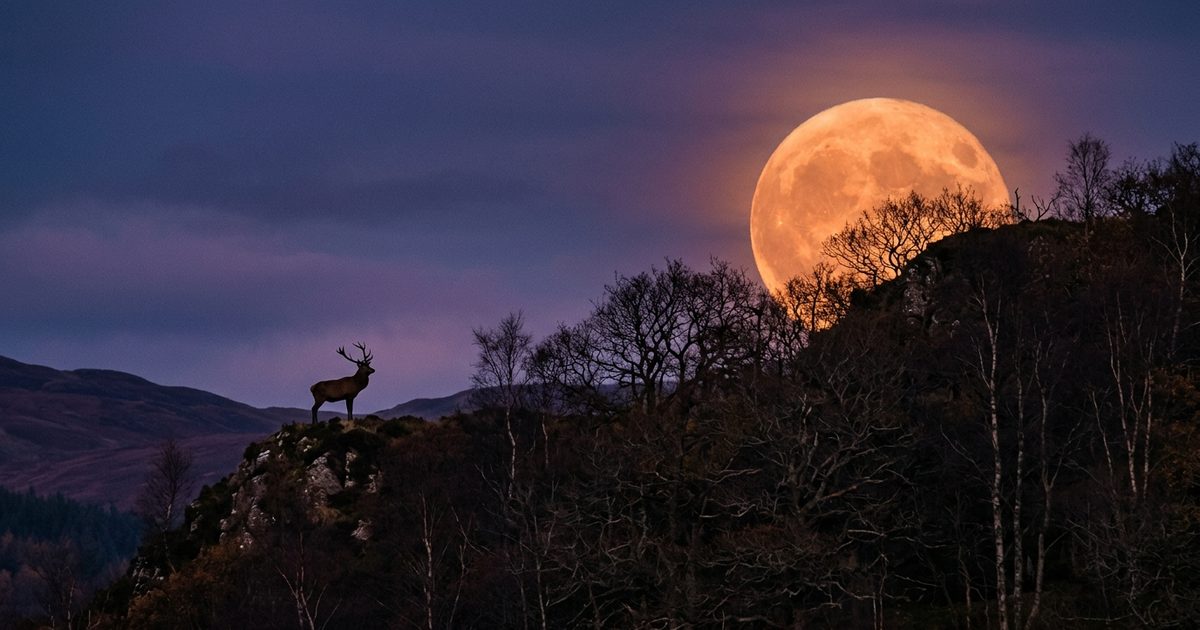
October’s sky has already delivered its early-month shooting stars, and it saves its headliner for the finale, the full moon with the wildest name on the calendar. The Hunter’s Moon rises in the second half of the month, huge and copper-colored over the rooftops, and its name, its colors and its strangely early schedule all have explanations, three stories in one that October’s lengthening evenings leave plenty of time to watch.
Why is October’s full moon called the Hunter’s Moon?
The short answer: almanac heritage. Rural traditions in Europe and North America named each full moon after its season, and October’s, the one following the Harvest Moon, lit the hunts before winter, game fattened through autumn, harvested fields leaving open ground, and above all an unusually early moonrise that stretched the useful evening. The name crossed the centuries, and the geometry that justified it still works every October.
That early-rising mechanism is the real astronomical curiosity here, the same one that made the Harvest Moon famous last month. Normally the moon rises about 50 minutes later each night. Around the autumn equinox, the ecliptic, the track the moon follows, meets the evening horizon at a shallow angle, and the nightly delay drops to 20 or 30 minutes depending on latitude. The result: several consecutive evenings with a full or nearly full moon already up at dusk, a natural streetlight taking over from the sun with no gap, a blessing for September’s harvesters, October’s hunters, and today’s evening walkers.
The spectacular colors of moonrise complete the picture, and they have their own explanation, detailed in our orange moon story. Low on the horizon, the moon shines through a maximum thickness of atmosphere, which reddens its light exactly as it does a setting sun, and the moon illusion, the brain’s trick of magnifying objects near the ground, makes it look enormous. The Hunter’s Moon is neither bigger nor more orange than any other, it is simply watched at the right moment, at moonrise, when all the effects stack up, which is precisely the viewing advice.
How to watch it, and October’s full sky program
Watching requires nothing but the right appointment. On the night of the full moon and the two or three evenings around it, look due east right after dusk, open horizon preferred, countryside, coastline, or any city viewpoint, and catch the rise itself, the show of the copper giant that pales and shrinks as it climbs. Exact local moonrise times are listed in any ephemeris, including NASA’s moon pages, and photographers will note that the best shots come in the first ten minutes, while the disk still sits on the landscape.
October’s complete program deserves its recap, because the month spoils early-evening skywatchers. The Draconids opened the month, the early sleeper’s meteor shower. The Orionids take over in the second half, richer and more nocturnal, dust from Halley’s comet. The Hunter’s Moon crowns it all, and the clocks falling back on the last weekend hand over a bonus hour of evening to enjoy it. Early darkness has a bad reputation, and October disproves it every year, even as it trims the daylight, provided you look up, due east, at the hour when hunters of old loaded their lanterns with nothing at all.
Vos questions
What is the Hunter's Moon?
The traditional name for October's full moon, the one that follows the Harvest Moon: in almanacs inherited from rural European and Native American traditions, each full moon carries a seasonal name, and October's lit the hunts before winter, with game fattened by autumn and harvested fields leaving open ground. This year it peaks in the second half of October.
Why does the Hunter's Moon rise so early in the evening?
For the same geometric reason as the Harvest Moon: around the autumn equinox, the ecliptic runs at a shallow angle to the evening horizon, so the full moon rises only 20 to 30 minutes later each night instead of the usual 50. The result is several consecutive evenings with a bright moon already up at dusk, the early moonlight that once served hunters and gave the name.
Is the Hunter's Moon bigger or more orange than other full moons?
It often looks huge and copper-colored, but that is position, not nature: watched at moonrise, low on the horizon, it is magnified by the moon illusion and reddened by the thick layer of atmosphere its light crosses, exactly like a setting sun. Once high in the sky, it is the same moon as any month.
When and how should you watch the Hunter's Moon?
On the night of the full moon and the two or three around it, look due east right after dusk: moonrise is the show, with the giant copper disk sitting on the landscape, and an open horizon makes it better. No equipment needed ; exact local moonrise times are in any ephemeris.