Why the moon looks orange tonight, harvest moon edition
Par Sam Arkwell · publié le 26 septembre 2026
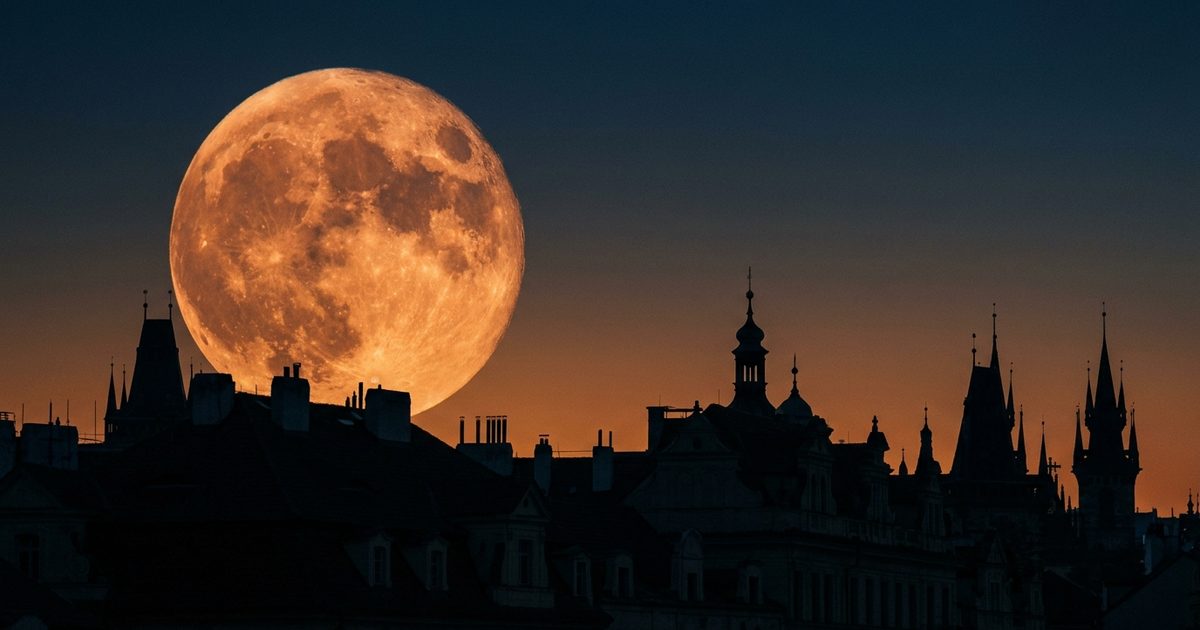
Sometime around dinner tonight, a huge copper disk will climb out of the eastern rooftops, and the photos will start flying. The harvest moon, the most famous full moon of the year, always makes this theatrical entrance, and the same question spikes every time it does. Why is the moon orange, and why only sometimes? The answer is one beam of light and a lot of air, and it explains every moonrise of the year.
Why is the moon orange tonight?
The short answer: because it is low. At the horizon, moonlight crosses a slice of atmosphere ten to fifteen times thicker than when the moon is overhead, and air scatters away blue light while letting orange and red through, exactly the sunset mechanism. Tonight’s full moon rises right at dusk, at its lowest point, hence the copper disk. As it climbs, the tint fades to white.
The light’s journey does all the work. Overhead, moonlight crosses a modest layer of useful air. At the horizon, the slanted path multiplies that thickness many times over, and every extra kilometer filters out a little more blue. What survives is the warm end of the spectrum, the same recipe that paints golden hour and every decent sunset.
The full moon maximizes the effect by scheduling. Rising exactly opposite the setting sun, it spends its first half hour hugging the horizon, in the thickest air of the night, and this weekend’s harvest moon, covered in our article this week, replays the scene several evenings running.
Huge and copper, what is real and what is not
The color is real, the size is in your head. The giant disk of moonrise photos is the moon illusion, a purely psychological effect: near the horizon, the brain compares the moon with rooftops and trees and reads it as enormous, while its angular size barely changes from horizon to zenith. A fixed-zoom photo debunks it on every attempt, to the standing disappointment of amateur photographers.
The illusion survives even knowing about it, and psychologists still argue over its exact cause. No matter, the combination works, a genuine copper color on a fake giant size, and that cocktail floods the feeds every fall.
The climb dissolves everything within the hour. As the moon rises, the air slice thins, copper pales to gold then white, and the giant shrinks back into the ordinary lamp of clear nights. The spectacular window lasts about twenty minutes, while the disk skims the rooftops.
When and where to watch tonight
The appointment keys off the sun. A full moon rises due east, within the hour after sunset, opposite the dying light, and this weekend the show lands conveniently at dinner time. Miss it and the moon replays the entrance tomorrow, half an hour later, thanks to this week’s unusually small daily delay in moonrise.
The viewing spot makes the show. An open eastern horizon, a hill, a shoreline, a long east-facing avenue, delivers the full sequence, first copper glow to whole disk resting on the roofs. No equipment needed, and phone night modes do respectable work from a steady ledge. Photographers get a bonus this weekend, as the orange disk rises straight into the deep blue of blue hour, the painter’s complementary pair served by the sky itself.
One word on omens, since the question returns every time. An orange moon at the horizon means nothing, it is optics. An orange moon high in the sky is another story, it can signal particles in the air, dust or distant wildfire smoke, reddening the light far from the horizon. The height of the tint tells its cause.
The twenty minutes worth keeping
The evening’s plan takes three lines. Check your local sunset time, face east within the following quarter hour, and watch copper turn gold turn white over the course of an hour, the year’s best free gradient.
Harvest crews once counted on this low copper lamp to finish the fields after sunset. The fields are gone for most of us, but the lamp still clocks in on schedule, tonight at dinner time, tomorrow for the encore. Few sky shows offer reruns. This one does, and it brings its own lighting.
Vos questions
Why is the moon orange tonight?
Because it sits low on the horizon: its light crosses a much thicker slice of atmosphere, which scatters away the blue and lets orange and red through, the same mechanism as a sunset. Tonight's harvest moon rises right at dusk, at its lowest, hence the spectacular copper disk. As it climbs, it fades to white.
What time should I watch the orange moon tonight?
Within the hour after your local sunset, facing due east: a full moon always rises opposite the setting sun. The disk stays orange and huge for about twenty minutes while it skims the rooftops, then shrinks and whitens as it climbs. That first window is the photogenic one.
Why does the rising moon look so big?
That is the moon illusion, a purely psychological effect: near the horizon, your brain compares the disk with trees and rooftops and reads it as enormous, while its actual angular size barely changes. The color is real physics, the size is in your head, as any fixed-zoom photo proves.
Does an orange moon mean anything?
Nothing at all near the horizon: the tint is atmospheric optics, not an omen. An orange moon high in the sky is different: it can signal particles in the air, dust or distant smoke, reddening the light far from the horizon. The height of the tint tells its cause.