Why is the sun rising later every day, the morning numbers
Par Sam Arkwell · publié le 17 septembre 2026
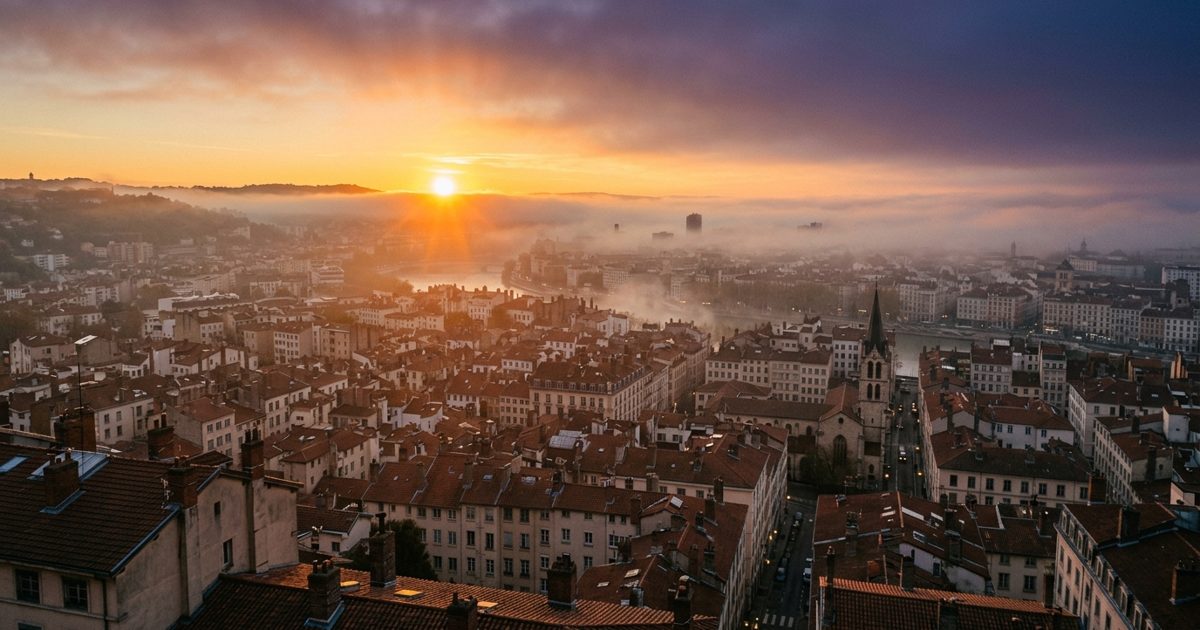
The short answer: sunrises are retreating by 1 to 2 minutes every morning because mid-September sits at the year’s steepest daylight slide, the same equinox geometry that is pulling sunsets earlier. Three weeks of it moves sunrise half an hour later, which is exactly why alarm clocks that rang in daylight on Labor Day now ring in the dark. The calendar ahead holds one big twist: the end of daylight saving time, November 1 in the US and October 25 in Europe, will hand mornings a full hour back overnight. And the darkest sunrises of the year come, counterintuitively, after the winter solstice.
The morning half of the autumn ledger, with its numbers, its twist, and its survival habits.
One to two minutes a morning: the ledger’s morning column
Our readers already know the evening side of the story, the suddenly-early darkness that slams shut around the equinox: the total daily loss of daylight, 2 to 4 minutes per 24 hours at mid-latitudes, is the year’s fastest right now. What the evening column takes, the morning column matches: the loss splits roughly in half between the two ends of the day, and sunrises retreat by 1 to 2 minutes every single morning, faster the farther from the equator you live.
Compounding does the rest. A 6:35 am sunrise on Labor Day becomes 7:05 by mid-September and will pass 7:30 by early October at typical mid-northern latitudes: half an hour of morning light gone in a month, precisely spanning the window when most alarms ring. The perceived switch from “waking in daylight” to “waking at night” is therefore not gradual in experience even though it is perfectly linear in astronomy: it happens the week the sunrise crosses your personal alarm time, and for millions of commuters, that week is now. The equinox itself, striking September 23 at 00:05 UTC, marks the peak of the slide; the daily loss decelerates afterward.
The November twist: an hour handed back overnight
The morning calendar holds the year’s most dramatic reversal, and it is man-made: the end of daylight saving time. When clocks fall back, November 1 in the US, October 25 in Europe, every sunrise instantly moves an hour earlier on the clock: a 7:30 sunrise becomes 6:30, and mornings receive, in one night, more light than the equinox slide took in six weeks. It is the biggest single-day gift the calendar makes to early risers, and it explains the traditional framing of the change: standard time is the morning’s friend.
The gift has its price on the other ledger, sunset crashing an hour earlier into the commute, and its expiry date: the orbital slide continues underneath, and by late November sunrises are back past 7 am, climbing toward their annual extreme. Which brings the connoisseur’s detail: the latest sunrises of the year do not fall on the winter solstice. Because of the equation of time, the small asymmetry of Earth’s elliptical orbit, the darkest mornings land in late December and early January, days after the shortest day, while the earliest sunsets fall in early December, days before it. The solstice is the shortest day; the worst morning and the worst evening each run on their own schedule.
Morning light is the anchor: the season’s habits
If the retreat of sunrise matters more than symmetry suggests, it is because morning light is the body clock’s main anchor: the first bright exposure of the day sets alertness, steadies mood, and times the following night’s sleepiness. When sunrise slips past wake-up, that anchor goes missing precisely at the hour it is needed, and the season’s foggy starts owe as much to the missing signal as to any lost sleep.
The habits that compensate are simple and, at this latitude of the calendar, worth installing now. Catch the light as soon as it exists: ten minutes outdoors after sunrise outweighs an hour behind glass, and a late sunrise is still a sunrise. Light the first hour deliberately: bright, cool indoor lighting at breakfast stands in for the missing sky far better than a dim kitchen. Hold the wake time steady: a fixed rising hour gives the clock its rhythm even when the sky delays its part. For the exact minute of tomorrow’s sunrise wherever you live, any weather service lists it, and our online clock keeps the reference time to the second. The mornings will be dark for a while, then suddenly lighter on the clock-change weekend, then dark again by December: the whole schedule is published years in advance, which is, as consolations go, the astronomer’s version of good news.
Vos questions
Why is the sun rising later and later right now?
Because mid-September sits at the year's steepest daylight slide: around the equinox, mid-latitudes lose 2 to 4 minutes of daylight per day, split between both ends, so sunrises retreat by 1 to 2 minutes every morning. Three weeks of that moves your sunrise half an hour later, which is why wake-ups suddenly feel dark.
When will mornings get lighter again?
At the end of daylight saving time: early November in the US (November 1, 2026) and late October in Europe (October 25). Setting clocks back one hour instantly moves sunrise an hour earlier, the year's biggest one-day gift to mornings, paid for by an hour-earlier sunset.
Are the latest sunrises of the year at the winter solstice?
Slightly after it, at mid-northern latitudes: because of the equation of time (Earth's orbital asymmetry), the latest sunrises land in late December and early January, days after the shortest day. The darkest mornings of the year come, counterintuitively, after the solstice.
Why does morning light matter so much?
Because morning light is the body clock's main anchor: it sets alertness, mood and the timing of the next night's sleep. When sunrise slips past wake-up time, deliberately catching light early, ten minutes outdoors, bright indoor lighting, becomes the season's most effective habit.