What time does it get dark tonight, the rule that always works
Par Sam Arkwell · publié le 14 septembre 2026
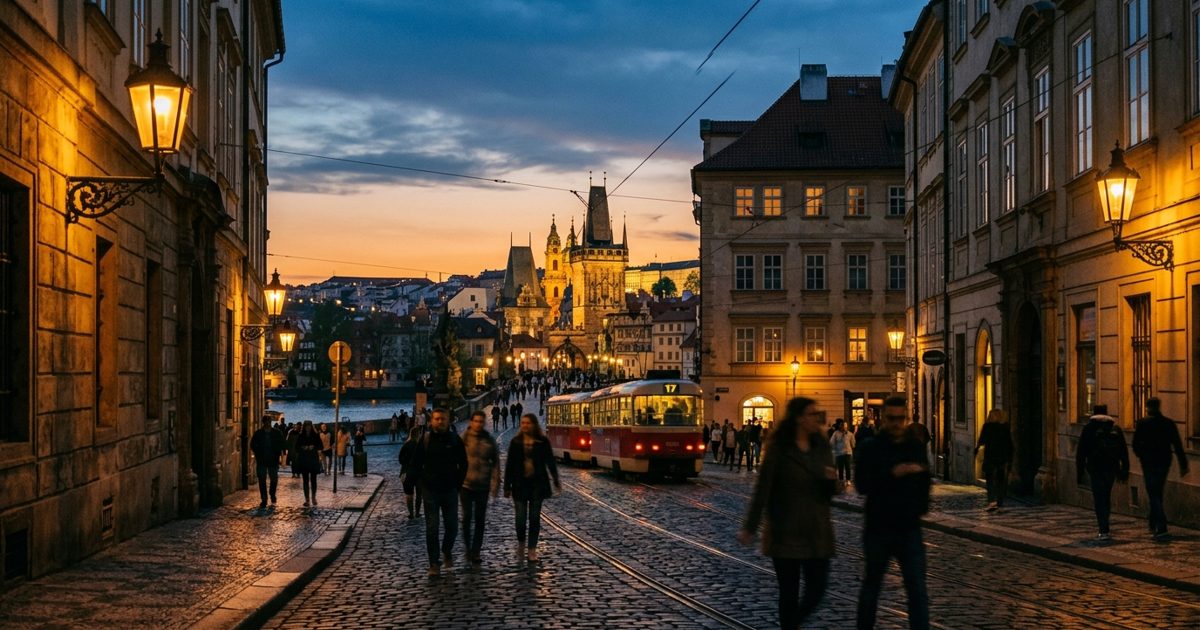
The short answer: it does not get dark at sunset. Practical darkness arrives at the end of civil twilight, when the Sun sits 6 degrees below the horizon, which at mid-latitudes takes roughly 25 to 35 minutes after sunset in September. The rule of thumb to keep: dark ≈ sunset + 30 minutes. And this is the season when night falls fastest: sunset is retreating a minute or two per day, and twilight itself is at its annual shortest around the equinox.
Where those thirty minutes of grace come from, what the three official twilights mean, and why autumn darkness slams shut instead of settling.
Dark is not sunset: the 6-degree rule
The daily confusion is universal: the weather app says “sunset 7:04 pm”, and at 7:04 pm the sky is still bright. Rightly so: sunset only marks the disappearance of the Sun’s disk below the horizon, while the atmosphere, a planet-sized diffuser, keeps scattering sunlight from below the horizon line. That luminous afterglow is twilight, and what everyday life calls “dark”, the moment for headlights, streetlights and closed curtains, corresponds to its first official boundary: the end of civil twilight, defined as the Sun reaching 6 degrees below the horizon.
How long the Sun takes to sink those 6 degrees depends on where you live and the season. At mid-latitudes, most of the United States and Europe, the September answer is 25 to 35 minutes, hence the pocket rule that outperforms most apps: dark = sunset + 30 minutes. Closer to the equator, the Sun dives almost vertically and dusk can be done in 20 minutes; toward high latitudes, the slide is shallow and twilight stretches, up to the white nights of summer where it never truly ends.
Beyond the civil boundary lie the specialists’ dusks: nautical twilight (6 to 12 degrees below), where sailors can still make out the horizon line for navigation, and astronomical twilight (12 to 18 degrees), whose faint glow only instruments register. Astronomers’ full night begins at 18 degrees, an hour and a half after sunset or more, three frontiers between the walker’s night and the stargazer’s.
Why autumn slams the lights off: the equinox double effect
The feeling of these weeks, night arriving “all at once”, has a precise geometric explanation, and it comes in two parts. The first is familiar: sunset is retreating by one to two minutes a day at mid-latitudes, the seasonal sprint that peaks around the September equinox. The second is the connoisseur’s detail: twilight duration itself varies through the year, and it bottoms out around the equinoxes.
The reason draws in one line: twilight length depends on the angle at which the Sun crosses the horizon. Near the solstices, the solar path meets the horizon obliquely, and the slide to 6 degrees dawdles, producing June’s endless blue evenings. Near the equinoxes, the Sun plunges at the year’s steepest angle: the descent is brisk, twilight compressed. Late September therefore stacks both effects, an earlier sunset and the shortest dusk, and the impression that autumn night falls like a curtain is not an impression: it is trigonometry.
The calendar ahead compounds it. In early November for the US and late October for Europe, the end of daylight saving time will yank the whole sequence an hour earlier overnight, moving dark from after the evening commute to the middle of it. Between mid-September and early November, mid-latitude dwellers lose their lit evenings entirely: six weeks, one hour of clock change, and about an hour of shrinking daylight.
Putting the rule to work
The 30-minute rule earns its keep in surprisingly many corners of life. Drivers and cyclists: headlight obligations in most jurisdictions attach to darkness or the end of civil twilight, not sunset, and the half-hour margin is exactly the window where being lit matters most. Outdoor plans: a hike, a run or a round of golf effectively ends at civil dusk, so the usable evening is sunset + 30, not sunset. Drone pilots and hunters: regulations commonly reference civil twilight boundaries, worth checking locally. Photographers: the same half-hour is the treasured blue hour, at its shortest and most intense in this equinox season, a reason to be early rather than punctual.
For the exact minute in your location, any astronomical almanac or weather service lists civil twilight times, and our online clock keeps you honest to the second while the countdown timer can count down to tonight’s curtain. But for the daily question asked at the office window, the pocket rule answers faster than any app: find tonight’s sunset, add half an hour, and that is when the day actually signs off. Tonight, wherever you are at mid-latitude: sunset plus thirty.
Vos questions
What time does it get dark after sunset?
At mid-latitudes (most of the US and Europe), practical darkness arrives at the end of civil twilight, roughly 25 to 35 minutes after sunset in September. The rule of thumb: dark ≈ sunset + 30 minutes. The gap stretches toward 40 minutes and more in midsummer and shrinks around the equinoxes; closer to the equator it is shorter, closer to the poles much longer.
What is the difference between sunset and dark?
Sunset is the instant the Sun's disk drops below the horizon, but the atmosphere keeps scattering its light: that glow is twilight. Everyday darkness corresponds to the end of civil twilight, when the Sun is 6 degrees below the horizon, the point where headlights and streetlights become necessary.
What are civil, nautical and astronomical twilight?
Three depths of dusk: civil twilight (Sun 0-6° below the horizon) still allows outdoor reading; nautical twilight (6-12°) keeps the sea horizon visible for navigation; astronomical twilight (12-18°) leaves a glow only instruments notice. Astronomers' full night begins once the Sun passes 18 degrees below the horizon.
Why does darkness fall faster in autumn?
Two effects stack: sunset itself moves earlier by 1 to 2 minutes a day in this season, and twilight duration reaches its annual minimum around the equinoxes, because the Sun then dives below the horizon at the steepest angle. In late September, night arrives both earlier and more abruptly than in summer.